
The Blue Angel Mushroom Is Fictional. The Science Behind It Isn't.

Adult Swim’s Common Side Effects asks what would happen if a mushroom could cure everything. Researchers are quietly asking the same question.
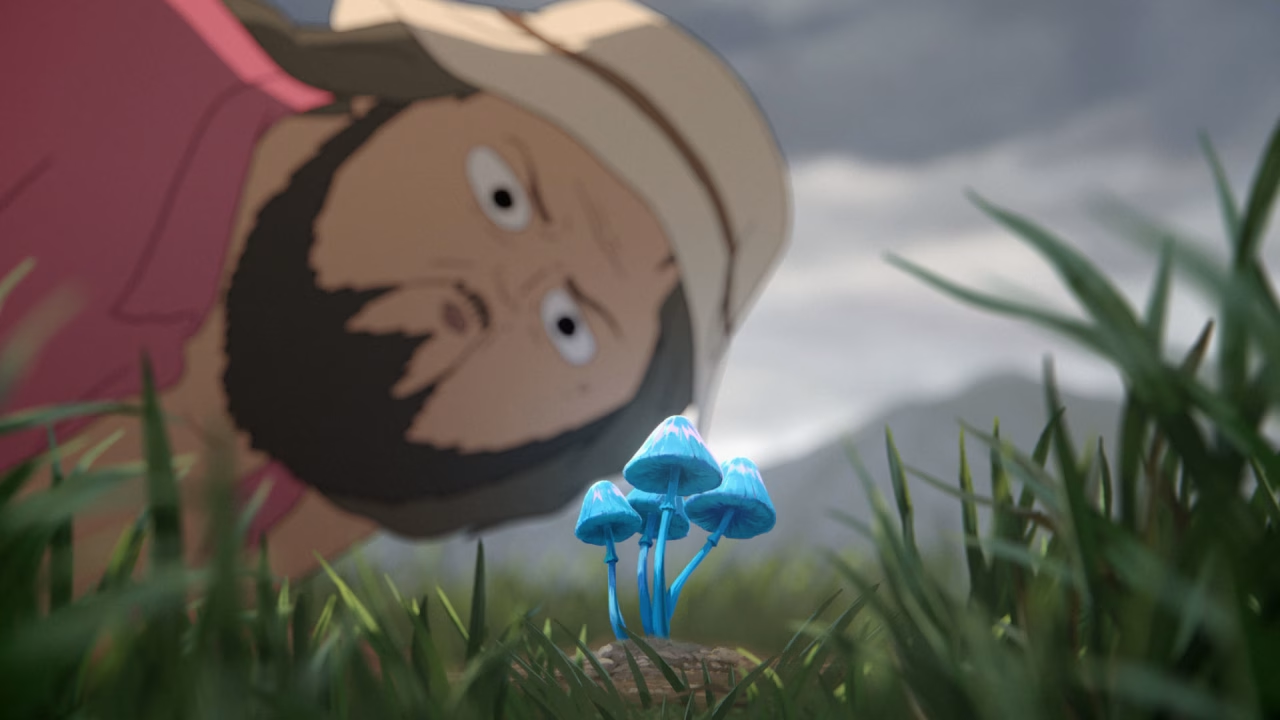
If you haven’t watched Common Side Effects yet, the premise is simple and kind of brilliant: a mycologist named Marshall stumbles onto a rare mushroom in Peru that appears to cure any disease or injury. He brings it back to New York. Big pharma immediately tries to bury it. Chaos ensues.
The show, created by Joe Bennett and Steve Hely and executive produced by Mike Judge and Greg Daniels, premiered on Adult Swim in February 2025 and was renewed for a second season before most people had finished the first. Critics called it one of the best animated series in years, funny, strange, visually stunning, and sharper about pharmaceutical power than most prestige dramas.
The Blue Angel Mushroom is fiction. The research behind the premise is not entirely.
The show’s protagonist wasn’t pulled from thin air. According to Wikipedia, Marshall was directly inspired by Paul Stamets, the real-world mycologist, author, and researcher who has spent decades arguing that fungi represent one of medicine’s most underexplored frontiers.
Stamets holds patents on fungal pesticides, has published extensively on medicinal mushrooms, and has been featured on Joe Rogan’s podcast so many times he’s practically a cast member. His book Mycelium Running is to mycology what a Bible is to its respective faith community. He also wears a hat made from mushroom mycelium. Marshall wears the same hat. The show is not subtle about this.
The deeper inspiration is Stamets’ actual research. He has long proposed that psilocybin, combined with other compounds, could produce effects that go well beyond mood and mental health. The show takes that idea and runs it to its logical, ludicrous extreme: a mushroom that fixes a broken leg, reverses dementia, closes a bullet wound. The real research is heading somewhere more interesting than most people realize.
What Psilocybin Actually Does to the Brain
The Blue Angel cures everything. Real psilocybin can’t do that. But what it can do is strange enough that the line between science and sci-fi is blurrier than expected.
Research published in Frontiers in Systems Neuroscience in 2025 found that psilocybin promotes neurogenesis, increases dendritic spine density, and supports neuroplasticity at a cellular level. A single dose can increase the expression of plasticity-related genes in the hippocampus and frontal cortex, with effects detectable a week later. Separate research from Frontiers in Neuroscience in 2024 documented anti-inflammatory effects on macrophages, reducing pro-inflammatory markers and increasing anti-inflammatory cytokines. A 2024 paper in Pharmacology and Therapeutics explored psilocybin’s potential role in dementia prevention through neuroinflammation reduction and hippocampal neurogenesis.
The Blue Angel fixes everything in one episode. Real psilocybin research is slower, messier, and more honest about what it can and can’t do. The direction of travel is the same.
What Psilocybin Is Currently Being Researched For
Active clinical trials as of 2025 — Johns Hopkins Center for Psychedelic Research
Source: Johns Hopkins Psychedelic Research Center, ClinicalTrials.gov — 100+ active trials as of 2025

Would Big Pharma Actually Try to Bury It?
The show’s villain isn’t a person, exactly. It’s a pharmaceutical conglomerate called Reutical, which will stop at nothing — government corruption, hired killers, regulatory capture — to ensure the Blue Angel never reaches the public. Cartoonish? Slightly. Implausible? Less than you’d hope.
The FDA granted psilocybin Breakthrough Therapy designation in 2018 for treatment-resistant depression, which is supposed to accelerate development. FDA approval for psilocybin-assisted therapy remains pending. Psilocybin is still Schedule I federally — no accepted medical use, high abuse potential — despite a growing body of evidence suggesting otherwise. The reasons are institutional, regulatory, and political rather than conspiratorial. The effect, though, is the same: a compound with documented therapeutic benefit remains largely inaccessible to most people who could benefit from it.
As we’ve covered before, access and conversation are moving at very different speeds. The show exaggerates the mechanism. It doesn’t exaggerate the outcome.
The Side Effects Nobody Mentions
The title of the show has a few layers. The obvious one: a miracle drug that cures everything probably has a catch. The subtler one: the side effects of suppressing medicine that works are paid by patients, not executives.
Real psilocybin does have side effects — temporary anxiety, nausea at onset, occasionally challenging psychological experiences that require support to navigate. The research on set and setting is consistent: context matters as much as the molecule. What psilocybin doesn’t do, under clinical conditions, is cause the kind of harm that would justify keeping it Schedule I while alcohol stays on supermarket shelves. Multiple safety reviews have found its risk profile low, its abuse potential minimal, and its therapeutic ceiling potentially very high.
The actual side effects of psilocybin are manageable. The side effects of not having access to it are considerably worse. If you’re curious about starting carefully, our Magically Microdosed Gummies are a low-stakes, well-dosed way to begin. For those further along, browse our full product range here.
The Blue Angel vs. Real Psilocybin Research
Could Science Actually Do This?
The Blue Angel cures gunshot wounds and broken bones. No molecule we know of does that. But psilocybin’s documented effects on inflammation, neurogenesis, and cellular repair are pointing researchers toward questions nobody was seriously asking ten years ago.
A 2025 study in Alzheimer’s and Dementia found that psilocybin reduced neuroinflammation and improved hippocampal neurogenesis in an Alzheimer’s mouse model, slowing cognitive decline across multiple behavioral measures. Case studies have reported improvements in neuro-Lyme disease. Psilocybin has shown cardioprotective effects in preclinical models. The OPEN Foundation’s 2025 neuroplasticity review found evidence of lasting neural repair across multiple brain regions from a single dose.
A mushroom that seals a wound in real time is animated television. A compound that reduces brain inflammation, promotes new neural growth, resets rigid behavioral patterns, helps people quit smoking, reduces alcohol dependence, alleviates end-of-life terror, and potentially slows neurodegeneration? That’s a Tuesday at Johns Hopkins.
Psilocybin Research: From Suppression to Renaissance
So Should You Watch It?
Common Side Effects is the rare show that uses an absurd premise to make a serious argument: about pharmaceutical power, about access to medicine, about what we decide is worth protecting and what we decide is worth suppressing. The animation is beautiful. The writing is sharp. Mike Judge and Greg Daniels haven’t lost it.
And if it sends you down a rabbit hole about real psilocybin research, that’s not a coincidence. The creators were reading Stamets and McKenna and Wasson before they wrote a single scene. The show knows exactly what it’s about.
The mushroom in the show is fictional. The conversation it’s starting isn’t.
