
The Mushroom Weather Report: How Fungi Predict Storms, Seasons & Climate Change
The Secret Meteorologists Living Beneath Our Feet
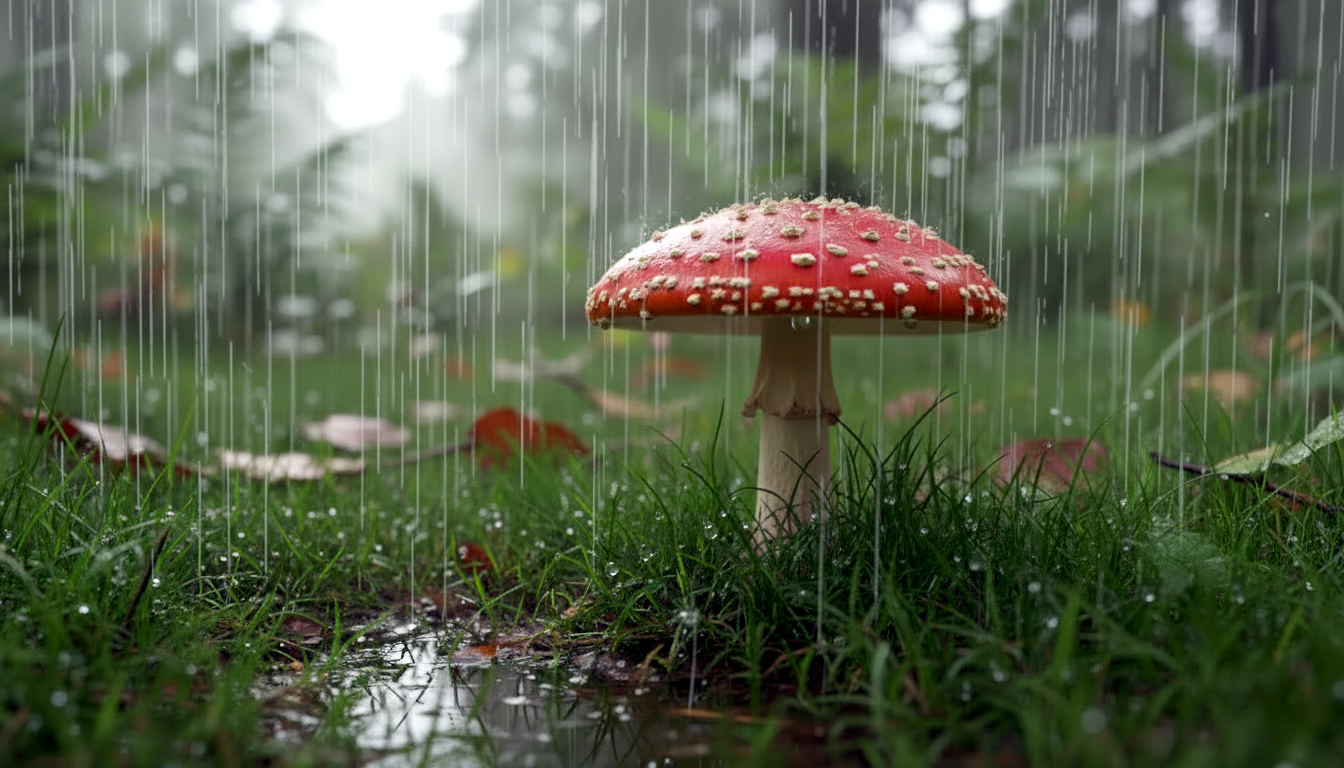
Walk into a forest just before a rainstorm and you can feel something shift. The air thickens, the light flattens, and the wind hushes in a way that feels almost conspiratorial. But there’s another, quieter sign — one older than meteorology and far more organic.
The mushrooms come out.
For centuries, foragers across the world have sworn that mushrooms appear just before rainfall. Not after — before. A strange idea, almost mystical sounding, until modern mycologists began uncovering the science behind it: fungi aren’t simply reacting to weather; they are anticipating it. They are, in a very literal sense, nature’s first weather sensors.
Understanding how and why requires looking beneath the forest floor — into the hidden world of mycelium, where the planet’s most responsive, most interconnected biological network lives and breathes.
The Weather Sense of Fungi
Beneath every mushroom is a living lattice of hyphae — microscopic filaments that stretch through soil, wood, and roots like the nerve fibers of a brain. These hyphae are shockingly sensitive. They swell and shrink with minute changes in moisture, temperature, and barometric pressure, often long before clouds gather or winds shift. Scientists describe mycelium as one of the most moisture-responsive materials in nature; it acts like a biological hygrometer, registering even tiny humidity changes as signals to grow, retreat, or fruit.
A 2020 paper in Fungal Biology Reviews explained how hyphae can change direction in response to humidity gradients, essentially allowing fungi to “feel” weather approaching. For certain species, that feeling activates the internal machinery needed to push up a fruiting body — the mushroom — sometimes hours ahead of the rain.
Temperature plays its own role. Each species has a narrow range in which it decides conditions are right for reproduction. Morels famously wait until the soil hits around 10–15°C; chanterelles often hold out for the first cool nights of late summer. A cold snap, a warm front, a sudden shift in soil temperature — and the forest floor begins to pulse with life.
Add in barometric pressure, which changes how quickly water moves inside mushrooms, and the recipe becomes clear: fungi are exquisitely tuned to the atmosphere. They aren’t predicting storms through magic — they’re reading the same physical signals meteorologists track today, but through biology rather than machines.
Old Knowledge, New Science
What scientists are now studying, traditional cultures recognized centuries — even millennia — ago.
In the Pacific Northwest, Indigenous knowledge keepers noticed how early-appearing cup fungi signaled shifts in salmon migration, tying fungal emergence to broader seasonal cycles. In Japan, the matsutake — a prized autumn mushroom — was so strongly associated with the arrival of seasonal humidity swings that it became a cultural marker of autumn itself. Medieval Europeans, noticing how fairy rings expanded across their meadows, believed mushrooms foretold seasonal change and even winter’s approach.
These weren’t superstitions. They were observations rooted in long-term ecological intimacy — the kind of pattern recognition modern science is only now quantifying.
Mushrooms as Climate Witnesses
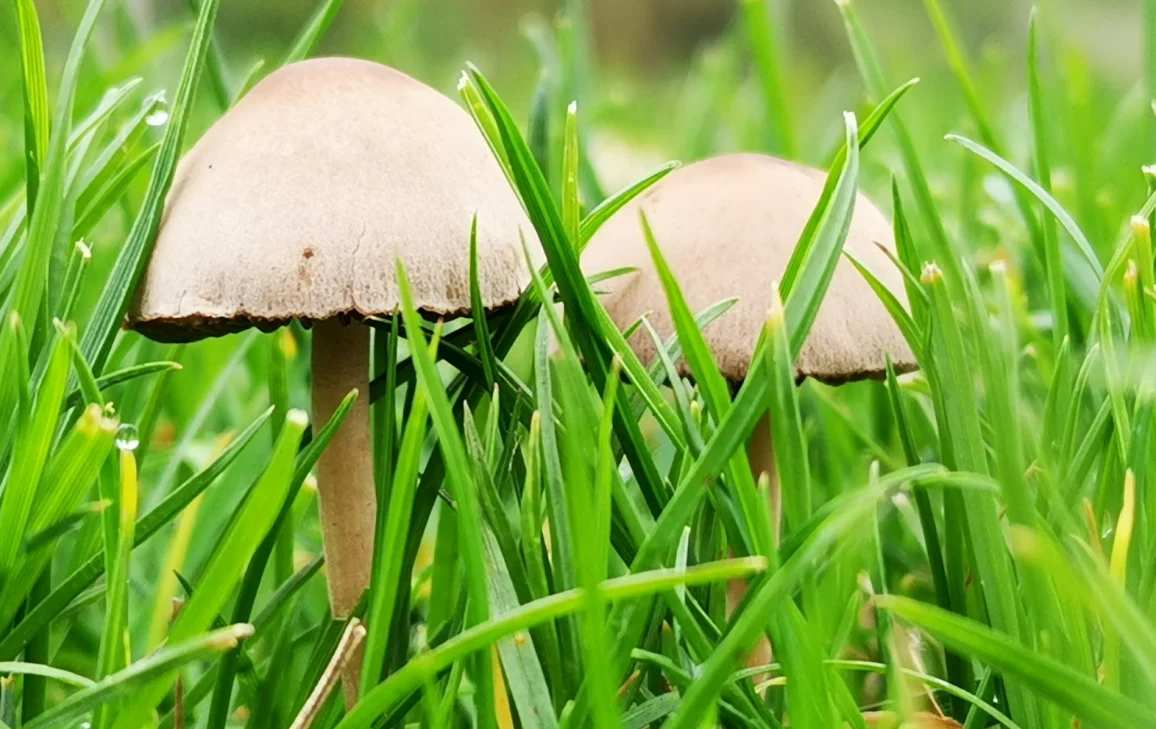
The more researchers study fungi, the more they realize mushrooms are not just short-term weather indicators. They are long-term climate witnesses.
A landmark 2009 PNAS study analyzing decades of fungal data in the UK showed that many species are fruiting up to two weeks earlier than they did in the 1950s. Other studies suggest autumn fruiting is extending deeper into the year, creating longer, stranger mushroom seasons — a signal of warming temperatures and shifting rainfall patterns.
These patterns, when tracked over hundreds of thousands of citizen-science observations (thanks to tools like iNaturalist and Mushroom Observer), are now being folded into climate research. Mushrooms are telling us something about the world — not metaphorically, but through hard ecological data.
Fungal rhythms are shifting. And ecosystems are shifting with them.
The Fungal Future: From Forecasting to Planet Repair
There’s something poetic about fungi: while they respond instantly to weather, they also operate on geological timescales, shaping soil, decomposing forests, and stabilizing ecosystems.
Today, scientists are beginning to use fungi not just to read the world, but to heal it.
Mycoremediation — the use of fungi to break down pollutants — has gained traction thanks to researchers like Paul Stamets, who documented how mycelium can degrade hydrocarbons, filter toxins, and revive damaged land. Mycelial networks also help retain soil moisture, making forests more resilient to drought — a crucial factor in climate-stressed regions.
Even more futuristic are projects testing mycelium as a living sensing material. A 2021 study published in Nature Communications explored embedding fungal networks into electronic systems, essentially creating “bio-sensors” capable of recognizing environmental changes.
NASA, meanwhile, is funding experiments to grow mycelium-based habitats for Mars explorers. If all goes well, future astronauts might sleep inside fungal structures that grow themselves using Martian dust.
The idea sounds absurd — until you remember that mushrooms already sense temperature shifts more accurately than most humans.
Reading the Forest’s Subtle Signals
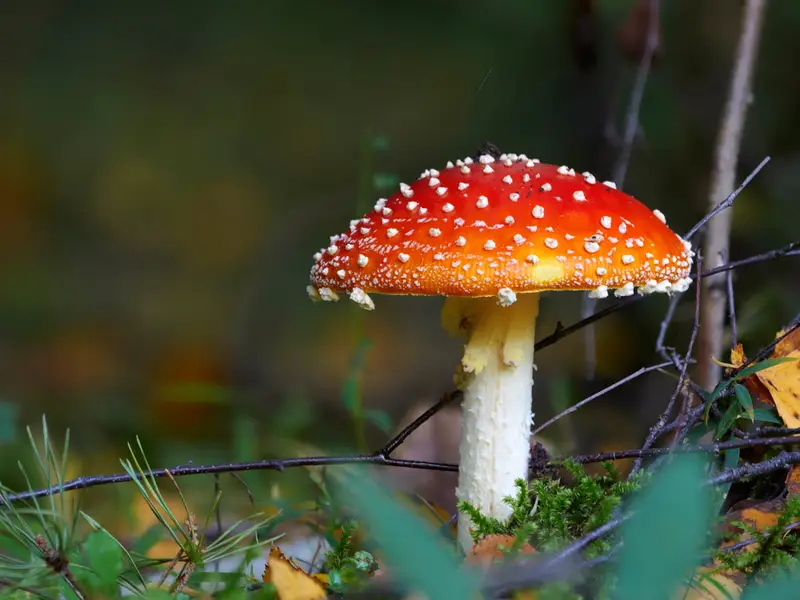
Next time you’re walking through the woods and you spot a fresh cluster of mushrooms — especially after a dry spell — consider it a low-tech weather report. The fungi might be telling you rain is on the way. Or that the season is shifting. Or that the climate is changing in ways bigger than any of us can feel day-to-day.
In a world where satellites track atmospheric rivers and AI models predict hurricanes months in advance, it’s strangely comforting that the oldest weather forecasters are still here, quietly pushing up through the soil when the moment feels right.
The forest is talking.
It always has been.
And the mushrooms are still doing their best to help us listen.
Back to SmilesHigh.Club
