
Alien Landscapes: 7 Real Mushrooms That Look Like They Crawled Out of Another Galaxy
Walk deep enough into any old-growth forest and the world begins to feel… unfamiliar. The shadows hum. The moss pulses with color you can’t name. And every so often, something glows, unfurls, or erupts from the soil in a shape that looks less “natural world” and more “extraterrestrial envoy.”
Mushrooms have always been Earth’s biological oddballs, but some species push so far past the boundaries of normal life-forms that if you saw them on the surface of Europa, you wouldn’t blink. These organisms don’t just challenge what a fungus can look like — they make you question what life itself might shape-shift into on another planet.
Below are seven real mushrooms that seem to have wandered in from a parallel universe, photographed by stunned hikers, mycologists, and people who momentarily wondered whether they had stepped into an alien biodome.
- Hygrocybe aurantiosplendens – The Alien Orange Waxcap
- Collybia Nuda – The Wood Blewit
- Geastrum Triplex – The Collared Earthstar
- Trametes Versicolor – Turkey Tail
- Aseroe Rubra – Anemone Stinkhorn
- Laccaria Amethystina – The Amethyst Deceiver
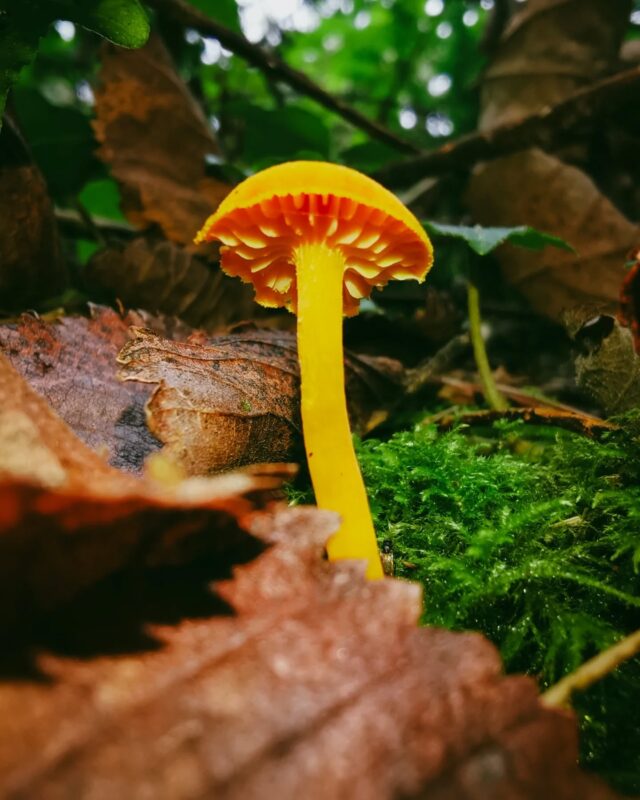
Hygrocybe aurantiosplendens – The Alien Orange Waxcap
Small, glossy, and glowing like a tangerine UFO, this waxcap looks straight-up neon against green moss beds.
Researchers call waxcaps “indicator species” — their presence often means the surrounding ecosystem is ancient, undisturbed, and wildly biodiverse. In other words, the deeper the forest, the weirder the mushrooms.
Planetary Vibes:
A downed escape pod from a citrus-colored star system.
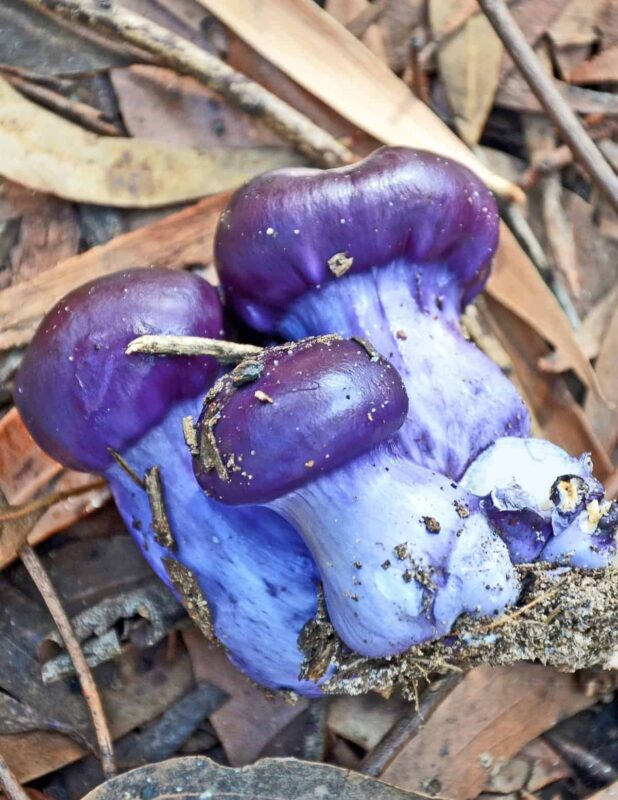
Collybia Nuda – The Wood Blewit
Most mushrooms are earthy, muted, shy. The Blewit is not.
This species emerges in royal purples, lavender grays, and cool violets that look digitally enhanced — like someone boosted the saturation on the forest floor. Its color shifts with age and temperature, giving it a mood-ring quality that feels oddly sentient.
Chefs love it. Artists worship it. Photographers chase it.
Planetary Vibes:
This is what happens when a mushroom is raised on a planet lit by ultraviolet suns.
Geastrum Triplex – The Collared Earthstar
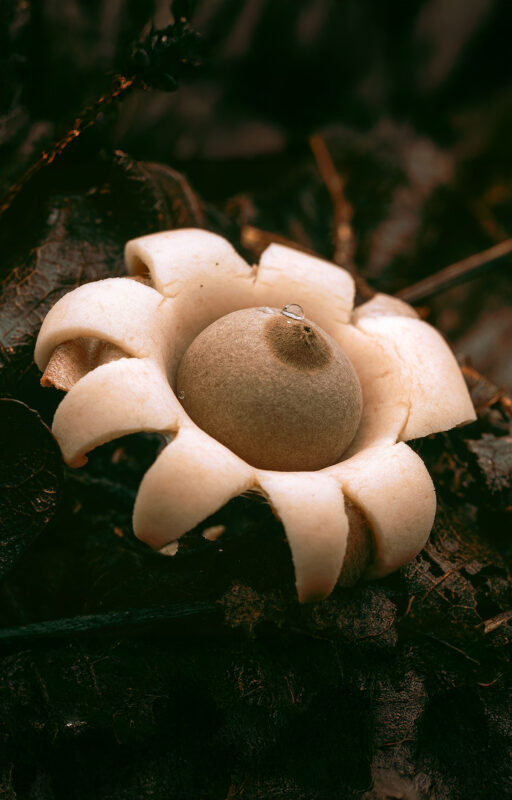
Earthstars are already strange — fungi that burst open into star shapes like tiny alien flowers. But Geastrum saccatum takes it further.
Its outer layer cracks open with mathematical precision, forming radial “arms” that curl back to reveal a perfectly spherical spore sac in the center. Tap it and it “puffs” like a miniature supernova.
Planetary Vibes:
Literally looks like a star system forming in a handful of soil.
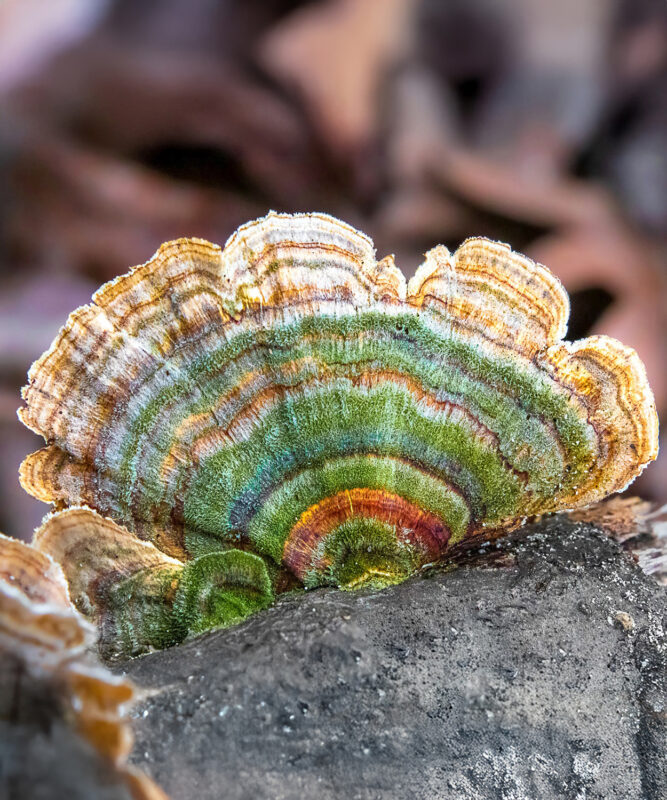
Trametes Versicolor – Turkey Tail
Zoom in on Turkey Tail mushrooms and they stop looking biological. Instead, they resemble the swirling topography of a distant exoplanet or a technicolor coral reef on an alien sea world.
Bands of blues, greens, purples, and browns ripple across each fan-shaped shelf. Under magnification, the texture appears fractal, layered, and almost metallic.
Planetary Vibes:
Aerial satellite footage from a fungal planet covered in rainbow canyons.
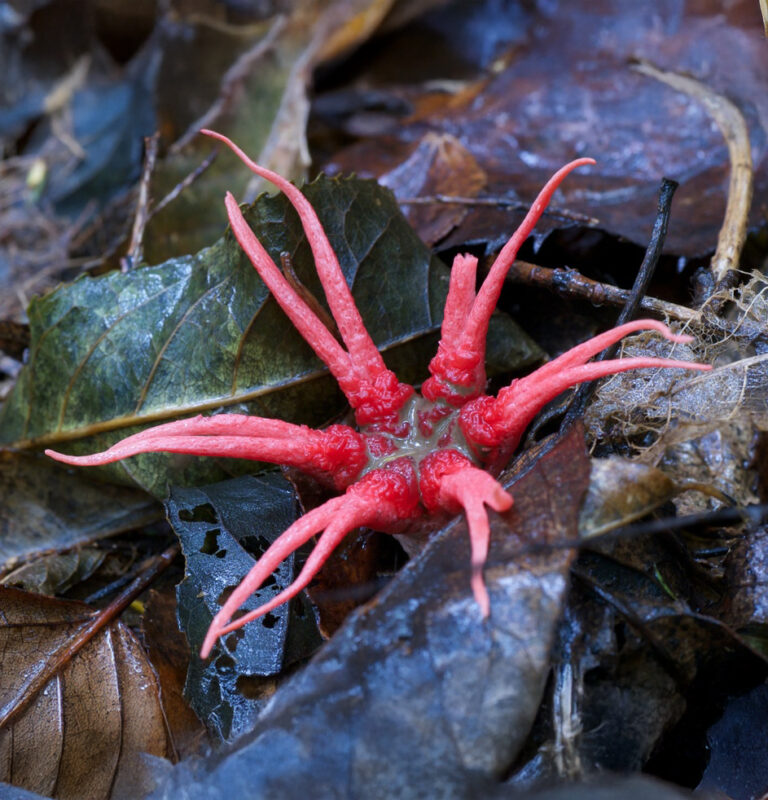
Aseroe Rubra – Anemone Stinkhorn
If Lovecraft designed a mushroom, this would be it.
Aseroe rubra bursts from the soil as a red, star-shaped bloom of rubbery tentacles. Its arms are coated in a dark, sticky substance meant to attract flies — nature’s Uber drivers for spores.
People who see it for the first time describe it as:
-
“some kind of alien sea creature,”
-
“a demonic starfish,” and
-
“the reason I’m sleeping with the lights on tonight.”
Planetary Vibes:
A carnivorous flower from a planet where everything has tentacles.
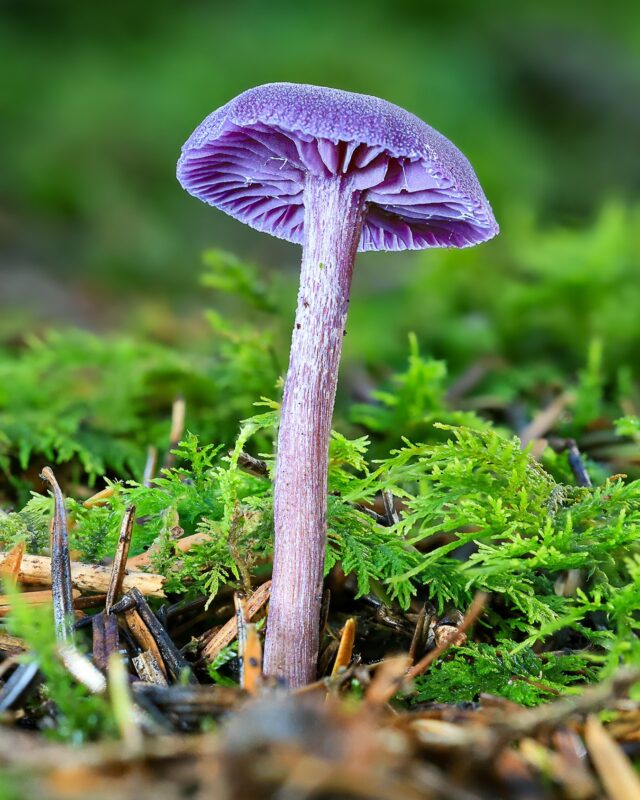
Laccaria Amethystina – The Amethyst Deceiver
This mushroom looks like it rolled out of the wardrobe department for Avatar. A shock of violet against the brown forest floor, the Amethyst Deceiver is so vividly purple it almost seems bioluminescent under the right light.
Even stranger: its color fades dramatically as it ages, giving it the uncanny ability to “shift forms,” which is why foragers say it “tricks the forest into seeing things.” Despite the supernatural palette, it’s actually edible — though it looks more like something grown in a high-tech lab on a distant moon.
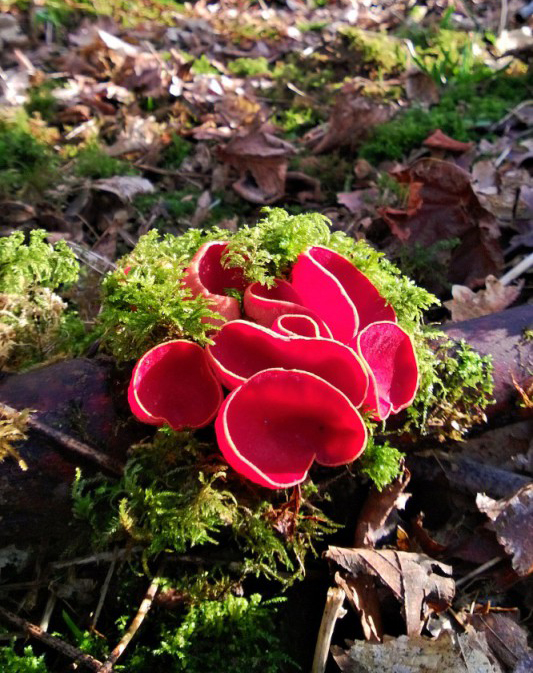
Sarcoscypha Coccinea – Scarlet Elf Cup
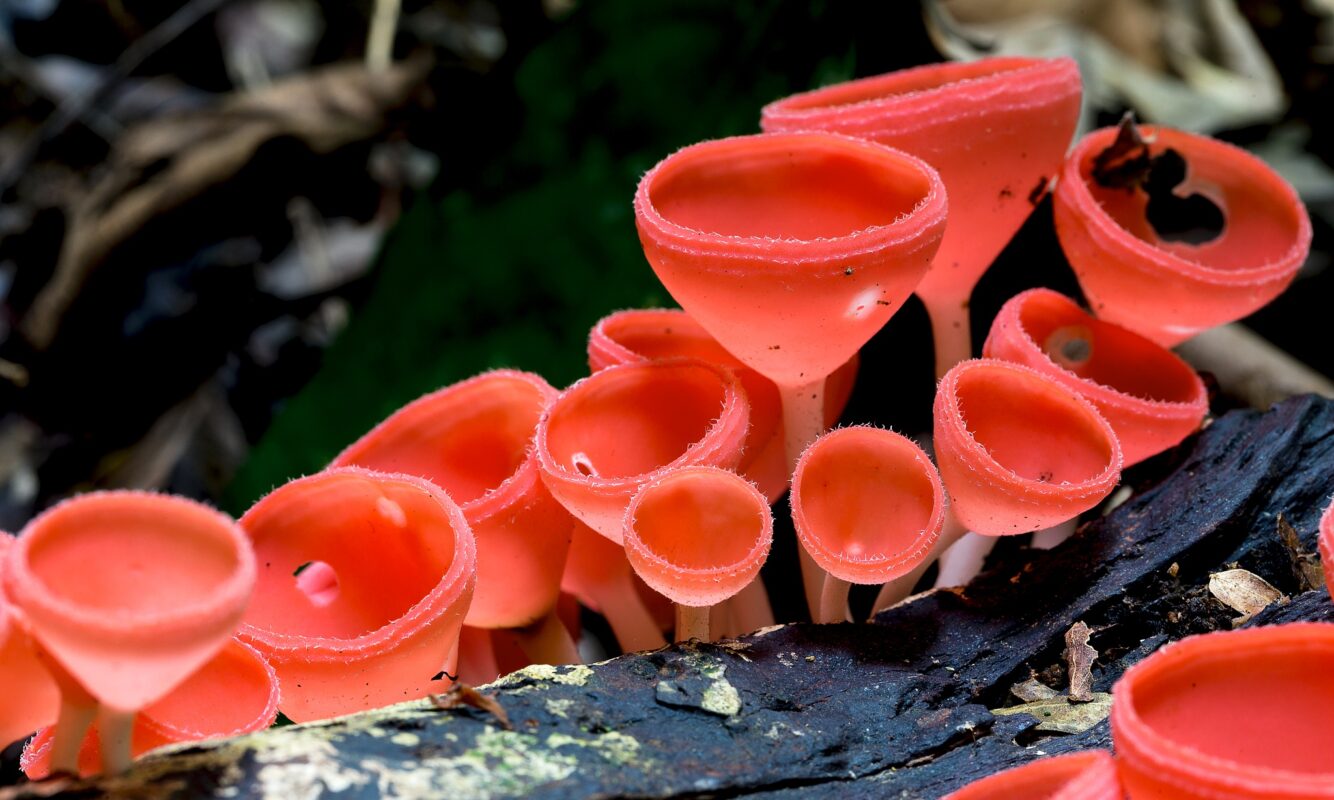
The Scarlet Cup looks like something that shouldn’t exist on Earth. These vivid, blood-red bowls erupt from rotting branches and damp forest floors like bioluminescent warning signals. Their interiors are so intensely red they seem lit from within, as if glowing with some quiet alien energy.
When you stumble upon them, they appear less like mushrooms and more like tiny fleshy saucers — overturned, waiting, watching. Their smooth red cups and stark white exteriors give them the aesthetic of a micro-organism from a terraformed planet, flash-growing in moist pockets of the underbrush. They often appear in clusters, which only adds to the feeling that you’ve found a hatchery for something not entirely terrestrial.
Why We See “Aliens” in Mushrooms
Biologists say many fungi appear alien because:
-
they evolved outside the animal-plant divide,
-
their reproductive strategies are bizarre,
-
their shapes follow different evolutionary pressures,
-
their pigments respond to minerals, moisture, and microbes,
-
many prefer deep shade, where vivid colors help attract insects.
In other words: mushrooms aren’t weird — we’re the weird ones for expecting them to look like us.
Final Thoughts: Visit Another Planet Without Leaving Earth
You don’t need a spaceship to visit a world stranger than fiction — you just need sturdy boots and curiosity. Mushrooms are reminders that Earth still holds mysteries, still surprises us, still produces life forms that look like they burst out of another galaxy.
If these seven species are any sign, the forests aren’t just alive — they’re cosmic.
Back to the safety of SmilesHigh.Club
