
From Forest Floor to Fashion Runway: The Rise of Mycelium Leather
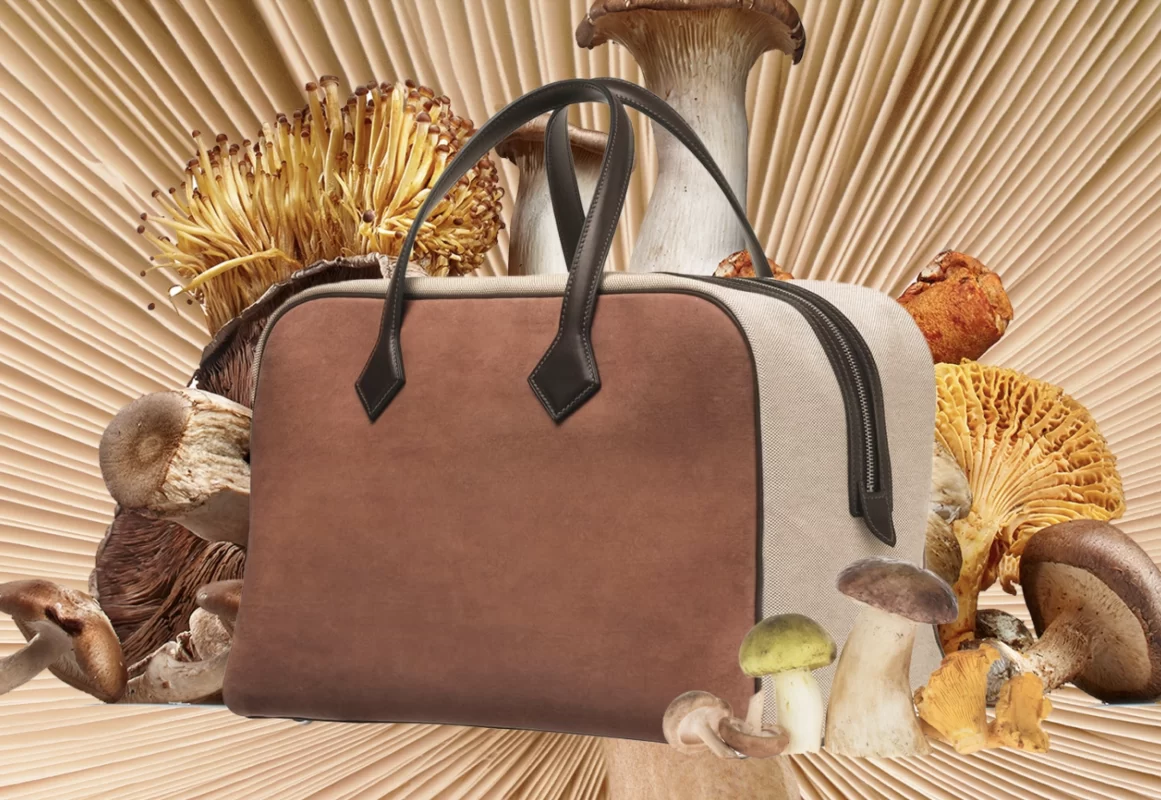
What if your next leather jacket grew in a lab from agricultural waste?
Long before fast fashion and factory farms, the forest had its own quiet way of creating beauty — and it’s making a comeback. Mycelium, the underground root network of fungi, is stepping into the spotlight as a sustainable alternative to leather and plastics. What started as a scientific curiosity has blossomed into a full-blown design revolution, with innovators growing handbags, shoes, and even architectural materials from mushroom roots. This isn’t science fiction — it’s fashion’s next frontier, sprouting from the soil beneath our feet.
Underground Beginnings
Deep beneath our feet lies one of the planet’s great networks: the mycelium. These fine fungal threads weave through soil, wood, and leaf-litter in a silent dance of decomposition, regeneration, and connection. For millennia, they’ve supported forests, broken down waste, and sewn the tapestry of ecosystems. Now, humans are turning that very web into high fashion.
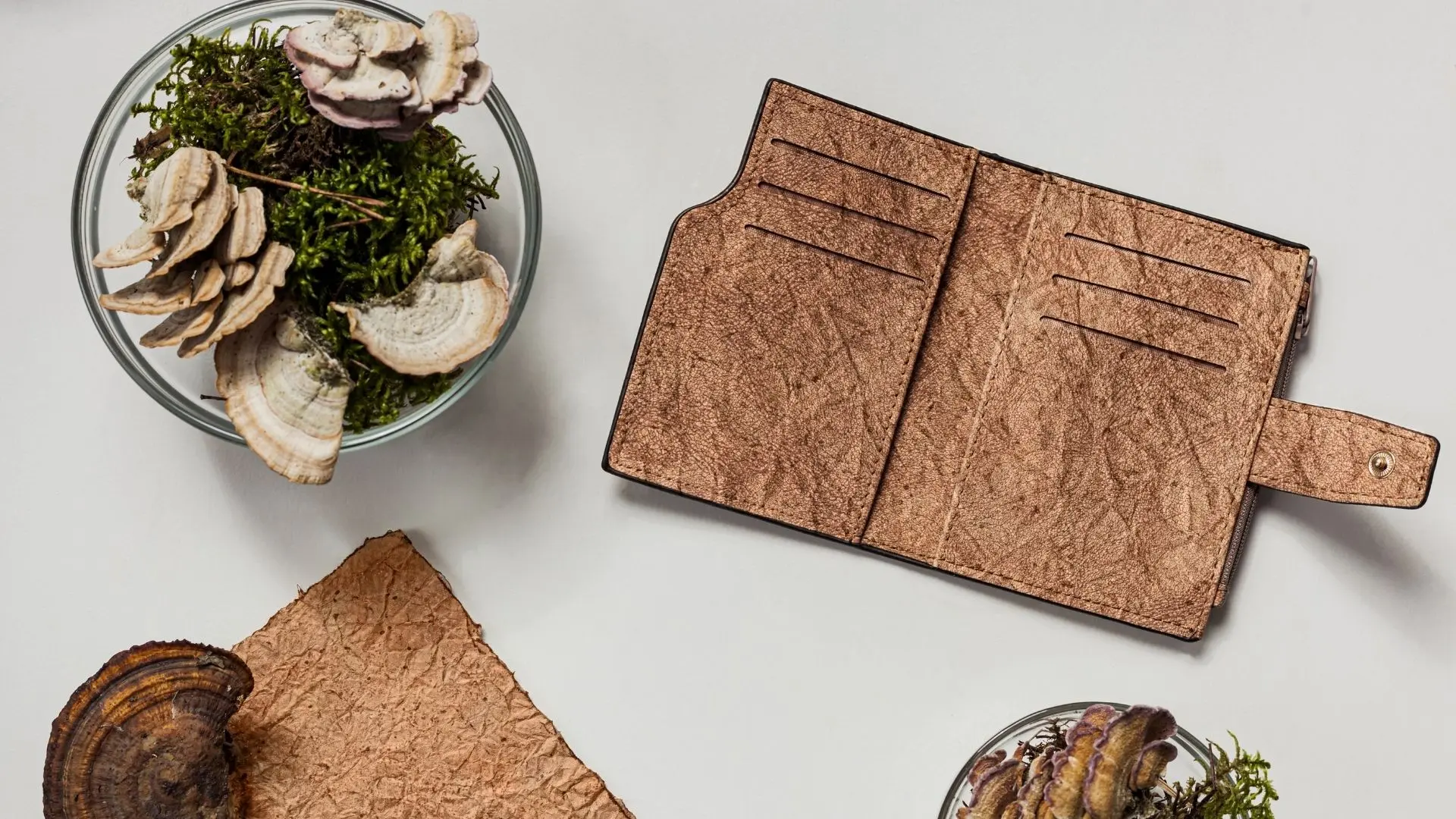
The concept is simple in theory: grow fungal mycelium into mats, compress and process them, and you get a material that looks and feels like leather, but without the cow, the chemicals, or the suffering. Brands are calling it “mushroom leather,” “mycelium leather,” or “bio-fabricated fungal hide,” and they’re betting it’s the next giant leap for sustainability. (See Technologynetworks: Mushroom Eco-Leather: The Next Step for Sustainable Fashion? Technology Networks)
Science & Innovation: Growing Fungi into Fabric
The actual biology of it is fascinating. Mycelium is the vegetative structure of fungi — a network of hyphae that absorb nutrients and create a matrix. Engineers have figured out how to grow it under controlled conditions, on substrates made from agricultural waste, sawdust, or other cellulosic materials. Once grown into a dense mat, it can be treated, dyed, and finished just like leather.
For instance:
-
The company Bolt Threads produces Mylo™, a mycelium-based leather alternative grown with renewable energy. Bolt
-
Research published in Research Directions: Biotechnology Design shows scalable new methods to create “mycelium leather mats” that could meet commercial demand. Technology Networks
-
A piece in The Ecologist highlights that mycelium leather offers a low-cost, eco-friendly alternative to animal hides and plastics. The Ecologist
Some details to emphasize:
-
Mycelium grows faster than animal hides.
-
It uses less land, water, and energy.
-
The end material is biodegradable. (See partially Plant-based Leather – Wikipedia) Wikipedia
Still, it’s not without challenges: achieving uniformity, matching the durability of cow-leather, scaling production, and making sure consumers accept the texture, feel, and look of something grown from fungi. (See Faunalytics: Fungi Fashion: The Sustainable Appeal of Mycelium Leather) Faunalytics
From Concept to Couture
What’s really exciting is when the science meets style. Luxury brands are starting to adopt mycelium leather — not just as a novelty but as a statement. For example:
-
Stella McCartney teamed with Bolt Threads to create the Frayme Mylo bag, one of the first luxury items made from mycelium. Vogue
-
Hermès, Kering, Lululemon, and others are exploring partnerships with companies like MycoWorks and Hydefy to bring fungal leather into mainstream fashion. Trellis
This is no cottage-industry side project anymore. The stage is large: millions of square feet, mass markets, and the potential to displace both animal leather and synthetic “pleather.” A recent article in Washington Post calls mushrooms “the darling of sustainability” because they can produce not just leather alternatives but packaging, building materials, and more. The Washington Post
Why This Matters — For the Planet and the People
The environmental stakes are high. Traditional leather production is resource-intensive: cattle require land and feed, tanning uses toxic chemicals, and the fashion industry is one of the largest polluters in the world. (See The Microbiologist: From Fungi to Fashion: Mushroom Eco-Leather Is Moving Towards the Mainstream.) the-microbiologist.com
Mycelium leather offers a radical shift:
-
Less land and water required.
-
Waste materials (e.g., sawdust, agricultural by-products) can become feedstock.
-
The end product is biodegradable, making it compatible with circular economy models.
-
It delivers style without animal exploitation or synthetic plastic pollution.
This shift isn’t only ethical—it’s economic. Many start-ups and research groups argue that as processes scale, fungal leathers could become cheaper than cow hides. (See The Microbiologist) the-microbiologist.com
Challenges, Reality Checks & the Road Ahead
No revolution happens overnight. Some of the current hurdles:
-
Matching the durability, texture, and aging characteristics of traditional leather. According to research, while mycelium leather performs well, it still trails animal leather in tear strength unless reinforced. Faunalytics
-
Scaling up production while maintaining environmental integrity and cost-effectiveness.
-
Consumer adoption: Will buyers accept that their handbag was grown from fungus?
-
Supply chains: Substrate sourcing, growth chambers, finishing processes, dyeing, and certification standards still need refinement.
-
Greenwashing risk: As with many “eco” materials, claims must be transparent and backed by lifecycle analyses. (See Wikipedia entry.) Wikipedia
However, the momentum is real. Mycelium materials are cropping up not just in fashion, but in packaging, architecture, and even aerospace. (See academic studies on mycelium composites.) arXiv
A Fungal Future — The Takeaway
From forest floor to fashion runway, the journey of mycelium leather is emblematic of a larger shift: moving from extractive to regenerative materials; from waste to resource; from disposable to compostable. Mushrooms are not just food or psychedelics—they’re material alchemists.
At Smiles High Club, we’ve long celebrated fungi for their mind-expanding potential. This time, we celebrate their shape-shifting material power. The next time you clip on a belt, zip a wallet, or slide into shoes, consider this: beneath the surface of style may lie the threads of an entire ecosystem.
The future of fashion isn’t just looking good—it’s growing. And the architects of that future may be less steel and more spores.

Cows eat mushrooms and leather comes from cows, so all leather is mushroom leather basically
Mushrooms leather is crazy.
I own that bag! spent 2 months pay on it, but worrrrth it!